The difference between the Birmingham and Glasgow Games
Last updated: 9.41am, Tuesday 17th November 2026
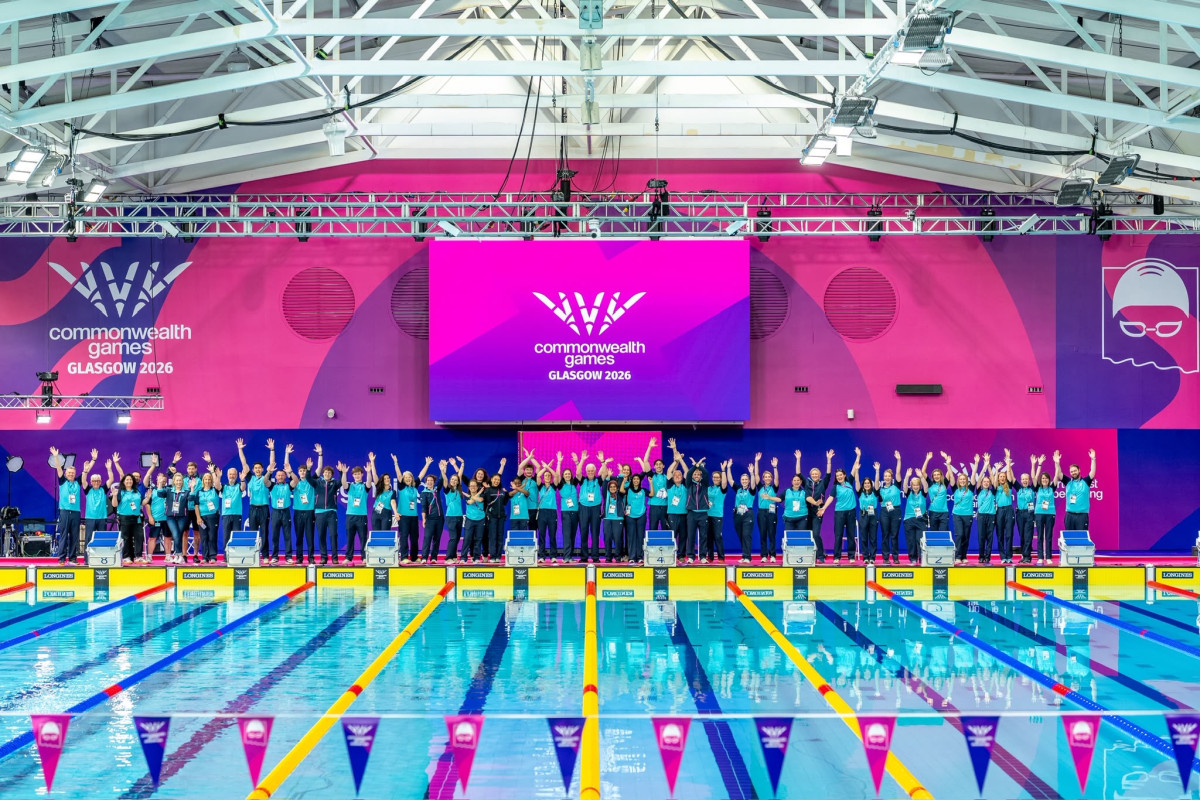
Core Associates had the privilege of helping to deliver both the Birmingham Commonwealth Games 2022 and the more streamlined Glasgow Commonwealth Games 2026. So, what were the differences between Glasgow and Birmingham from the perspective of Core Associates’ inputs?
The Birmingham 2022 Commonwealth Games featured 20 sports and over 5,000 athletes competing across multiple major venues, whereas the Glasgow 2026 Commonwealth Games reduced costs and turnaround time by significantly scaling back to 10 sports and approximately 3,000 athletes.
Scale
• Birmingham 2022: A large-scale, traditional multi-sport event utilising extensive regional infrastructureand including a dedicated athletes' village.
• Glasgow 2026: A highly compact, cost-effective model adopted after the original Australian host,(Geelong in Victoria) withdrew. Glasgow used existing venues within an 8-mile corridor and relied on hotel accommodation instead of building an expensive athletes' village.
Sports Program
• Birmingham 2022: Featured 20 sports, including a comprehensive aquatics schedule (diving,swimming), wrestling, mountain biking and road cycling.
• Glasgow 2026: Streamlined to 10 core sports. Wrestling, rugby sevens, cricket, hockey, diving, roadcycling and mountain biking were omitted.
The new scaled-back list of events included:
o 3x3 Basketball and 3x3 Wheelchair Basketball
o Artistic Gymnastics
o Athletics and Para Athletics (Track & Field)
o Bowls and Para Bowls
o Boxing
o Cycling Track and Para Cycling Track
o Judo
o Netball
o Swimming and Para Swimming
o Weightlifting and Para Powerlifting
The scaled-back format of the Glasgow 2026 Games has provided a highly successful ‘proof of concept’ that is actively reshaping how future major sporting events can be more sustainably and economically delivered.
Events such as Road Race cycling and the Marathon were not included as these require substantial organisation and incur additional costs for set up and security without the same return on investment in ticket sales.
By slashing typical hosting budgets by roughly 60% compared to Birmingham 2022, Glasgow successfully demonstrated that mega-events can maintain their sense of spectacle without generating major debt.
Lower Barriers to Entry for New Hosts
• Broader Eligibility: By taking a more rational approach to multi-billion-pound investments in new sports facilities and athletes' villages, mid-sized cities or developing economies now have the potential to host
the Games on a more affordable and sustainable basis.
• Surge in Hosting Interest: This format has revived global interest in the event, with over half a dozen countries (including Canada, New Zealand, Nigeria, and India) submitting official expressions of interest to host the 2030 or 2034 Games.
Flexible "Host Partnership" Framework
• Customised Sports Programmes: The Commonwealth Games Federation (CGF) has moved away from rigid templates. Future hosts can now choose a smaller programme of 10 to 15 sports that specifically
align with their existing regional venues, avoiding costly and potentially future “white elephant” venues.
• Multi-City and Multi-Nation Bids: The CGF is actively promoting co-hosting options for 2030 and beyond, allowing regions to split the operational footprint and further dilute financial strain.
Shift in Legacy Focus
• Operational Excellence Over Concrete: Instead of a legacy defined by brand-new stadia, Glasgow shifted the focus to immediate social and community programming (like the All In initiative) and environmental sustainability.
• Blueprint for Short-Notice Turnarounds: Proving that international games can be successfully planned in under 20 months opens the door for compressed timelines, giving future hosts ultimate flexibility.
Ahmedabad India is following the Glasgow Games “Light” example to stage the Centenary 2030 Commonwealth Games. Ahmedabad is set to feature 15 to 17 sports and has been widely interpreted as a potential pre-cursor to what could be the country’s first Olympic Games.
For the 2026 Glasgow Games, Core Associates were engaged as part of the Trivandi Event Delivery Partner (EDP) team working alongside suppliers, contractors and the wider project team to support the installation of temporary seating, carpet, tents, fencing, barriers, cabins, partition walling and other overlay elements. We worked on concepts, developed them through milestone iterations and ultimately supported the production of detailed technical information that could be used to deliver the physical overlay.
Our input included:
• Principal Designer role
• Statutory Approval co-ordination
• competition layouts
• spectator seating
• sightline analysis
• broadcast and media facilities
• ceremonies requirements
• rigging coordination
• back-of-house spaces
• security strategies
• queuing strategies
• wider spectator environments including holding areas
Prior to Glasgow 2026, the Core Associates team was also involved in the successful delivery of the 2018 European (Multi sport) Championships, the 2020 Euros at Hampden, the Birmingham Commonwealth Games in 2022, the 2023 UCI Cycling World Championships Glasgow, and the Paris Olympics in 2024. With an eye on Los Angeles, Ahmedabad, Brisbane and Salt Lake City, we will continue to apply our vast experience to the staging of major events.